The Vassal Trap: Why Mistral CEO Arthur Mensch Is Right About Closed APIs & Code Sovereignty
Why Renting Intelligence from Closed Monopolies Turns Software Companies into Vulnerable Tenants—And Why Owning Your Models, Data, and Developer Environment Is the Only Antidote
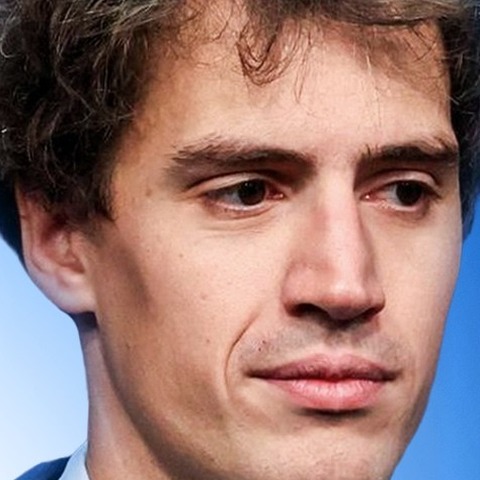
- •At 03:20, Arthur Mensch defines AI as a foundational sovereign technology: every company—whether in the US, Europe, or Asia—must own the technology, run it close to its data, and control its cost.
- •At 05:12, Mensch highlights the core enterprise security rule: companies cannot allow proprietary IP and workflow telemetry to flow back to an external AI subprocessor.
- •At 11:36, Mensch exposes the closed frontier endgame: if enterprises rely on two or three centralized AI providers, those providers will use customer data to build competing systems and disintermediate their own customers.
- •ZeroSlop Studio enforces this exact architectural doctrine: local NVMe file storage, zero-knowledge passphrase-locked BYOK credentials, and 100% offline local model execution.
In a landmark interview on 20VC with Harry Stebbings, Mistral AI co-founder and CEO Arthur Mensch dismantled the illusion that software companies can safely build their future on rented, closed-source AI APIs. Speaking at the 03:20 mark on why sovereign AI is a hard economic imperative rather than a political talking point, Mensch stated verbatim:
"When we started Mistral in 2023, we started with this conviction that this was a sovereign technology—in that as a company, as a state, wherever you are, whether in the US, in Europe, or in Asia, you need to own the technology. You need to be able to customize the systems, to run them very close to your data, you need to be able to control the cost... It's mostly an economic problem, it's not really a political problem. It's just too important a technology."
Shortly after, at the 11:36 mark, when asked about centralized frontier labs withholding their weights behind closed endpoints, Mensch laid bare the structural endgame priced into Silicon Valley's closed AI valuations:
"If we end up in a world where all companies need to rely on two or three centralized AI providers, that gives them enormous leverage. They will use the data that is being produced by the systems to make better systems—and to go after the business of their customers. Because at the end, this is the endgame. This is pretty clearly what is being priced in today."
For any engineering leader, founder, or enterprise CTO, Mensch's diagnosis should register as an immediate operational directive. When an engineering organization standardizes its workflows around closed, centralized AI proxies, it is not merely adopting a developer tool—it is training and subsidizing a future vertical competitor.
The Mechanics of the Closed Oligopoly Endgame
To understand why centralized model providers inevitably turn on their own ecosystem customers, one must look at the capital structure of frontier AI. Justifying hundred-billion-dollar valuations requires far more than wholesale per-token API fees. Closed providers must move up the application stack:
Why Data Sovereignty Must Be Physical, Not Contractual
Many organizations attempt to rely on vendor terms of service promising zero training on enterprise data. In systems engineering, however, architectural custody always supersedes legal promises:
How ZeroSlop Studio Enforces the Sovereign AI Doctrine
ZeroSlop Studio was architected from day one to ensure that software teams never fall into the centralized vassal trap:
Arthur Mensch is right: AI is too important a technology to rent from a closed oligopoly that plans to disintermediate your business. Sovereign engineering starts by owning your code, your keys, and your compute.
Subscribe to future engineering dispatches and release updates
Direct notifications when we publish new security benchmarks, local model guides, and major ZeroSlop Studio releases.

Why Closed AI Monopolies Will Inevitably Lose to Localized Open Weights: The Yann LeCun Doctrine

The Sovereign AI Doctrine: Why Every Enterprise and Nation Must Compute on Their Own Ground

The Proof of Merge: Why Linus Torvalds Built Git on Cryptographic Verification—Not Blind Trust
Try ZeroSlop Studio Today
Operator-blind key security, multi-language pre-save verification, standard portable Git, and $0 AI token markup.