The Sovereign AI Doctrine: Why Every Enterprise and Nation Must Compute on Their Own Ground
NVIDIA CEO Jensen Huang on the Mandate for Data Ownership, Local Compute Clusters, and Why You Cannot Export Your Intelligence
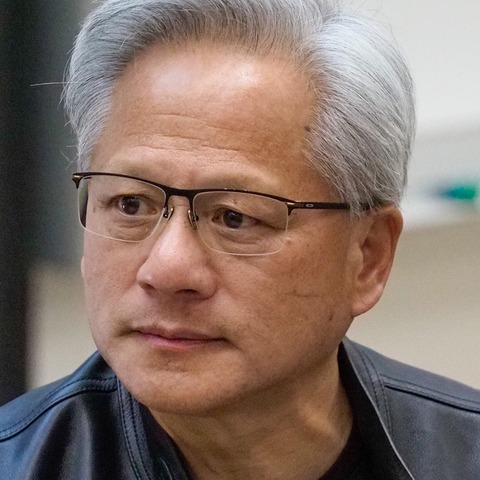
- •"You own your data; you must own your intelligence." Handing internal data to third-party cloud monopolies allows them to digitize your institutional knowledge and sell it back to you at retail margin.
- •Compute infrastructure has decentralized: modern developer workstations and local GPU clusters now comfortably run quantized 32B–70B reasoning models at interactive speeds without cloud latency.
- •Sovereign AI is not isolationism; it is operational security and economic self-determination across both sovereign nations and private software enterprises.
- •ZeroSlop Studio grounds this doctrine into developer tooling: code never leaves your workstation, verification happens locally before file save, and local GPUs run inference via Ollama with zero internet dependency.
At the World Governments Summit in Dubai, NVIDIA Founder and CEO Jensen Huang delivered a seminal address outlining what has become known as the Sovereign AI Doctrine. Speaking before world leaders and technology executives, Huang dismantled the assumption that artificial intelligence should be centralized in a few multinational hyperscaler datacenters:
"You cannot allow your intelligence to be digitized, harvested, and sold back to you. You own your data. You produce the data. Therefore, you must produce your own intelligence. Every nation, every enterprise, every sovereign entity must own its compute infrastructure."
Huang's framing transformed the conversation around AI from a consumer convenience into an infrastructure imperative. Your proprietary code, your institutional memory, and your operational workflows represent your most valuable capital assets. Exporting them to a remote cloud silo is an abdication of sovereignty.
The Collapse of the Datacenter Monopoly
For years, hyperscalers claimed that AI would forever remain too massive, too power-hungry, and too complex for localized deployment. That narrative served their cloud margins—but hardware physics has proven them wrong:
The Hidden Fragility of Rented Cloud Dependencies
Building your software organization around remote AI cloud proxies introduces existential points of failure:
Grounding the Sovereign AI Doctrine in ZeroSlop
ZeroSlop Studio translates Jensen Huang's Sovereign AI Doctrine into the physical reality of daily software development:
Sovereignty is not an abstraction—it is the physical reality of computing on your own ground.
Subscribe to future engineering dispatches and release updates
Direct notifications when we publish new security benchmarks, local model guides, and major ZeroSlop Studio releases.

The Vassal Trap: Why Mistral CEO Arthur Mensch Is Right About Closed APIs & Code Sovereignty

Why Closed AI Monopolies Will Inevitably Lose to Localized Open Weights: The Yann LeCun Doctrine

The Proof of Merge: Why Linus Torvalds Built Git on Cryptographic Verification—Not Blind Trust
Try ZeroSlop Studio Today
Operator-blind key security, multi-language pre-save verification, standard portable Git, and $0 AI token markup.