The Proof of Merge: Why Linus Torvalds Built Git on Cryptographic Verification—Not Blind Trust
The Core Invariant Behind Decentralized Version Control: You Never Accept Code You Cannot Cryptographically and Mechanically Verify
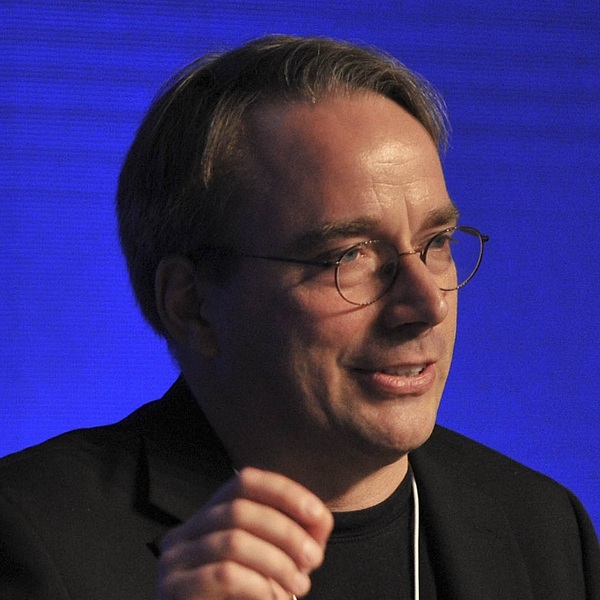
- •Git was specifically designed by Linus Torvalds around an adversarial, zero-trust model: every commit is cryptographically hashed, ensuring that silent code tampering or history rewriting is mathematically impossible.
- •AI coding agents operate as untrusted contributors: they generate probabilistic text that must be verified by deterministic compilers, AST parsers, and test suites before touching working files.
- •Rented cloud editors break Git's guarantees by using brittle proprietary undo buffers; ZeroSlop uses native Git worktrees to isolate agent tasks and protect branch integrity.
- •Decentralized version control proves that developer ownership and distributed autonomy always outperform centralized, top-down walled gardens.
In 2007, standing before a packed auditorium at Google Headquarters, Linus Torvalds gave what would become one of the most influential architectural lectures in computing history. Explaining why he had built Git from scratch after the BitKeeper fallout, Torvalds did not talk about convenience or features. He talked about trust, cryptography, and distributed authority:
"The foundational design of Git is that you do not trust anybody. Every single commit, every tree, every blob is hashed with a cryptographic signature. If someone tries to tamper with a commit from ten years ago, the entire graph breaks. You cannot lie to Git."
Torvalds' breakthrough was recognizing that in a distributed software project with thousands of contributors, trust is not an interpersonal agreement—it is a cryptographic invariant. You never accept code simply because someone handed it to you. You verify every byte against the mathematical proof of the directed acyclic graph (DAG).
The AI Agent as an Untrusted Contributor
Nearly two decades later, the software engineering industry is confronting a massive influx of code generated not by human contributors, but by probabilistic AI language models. Yet the prevailing generation of AI code editors has forgotten Torvalds' core lesson.
When an autonomous AI agent proposes changes across five files in a repository:
Mechanical Verification Before File Commit
Linus Torvalds proved that decentralized collaboration only works when gatekeeping is automated, rigorous, and uncompromising. At ZeroSlop, we apply this exact invariant to AI-assisted development:
The Permanent Superiority of Distributed Systems
Torvalds built Git because centralized version control systems (CVS, Subversion, Perforce) created single points of administrative failure and developer vulnerability. Centralized servers could crash, revoke developer credentials, or corrupt repository history. Git made every developer's workstation a complete, sovereign repository of truth.
ZeroSlop Studio extends the Torvalds doctrine into the modern AI era: rejecting centralized cloud proxies, protecting local repository integrity, and demanding cryptographic and mechanical proof before any code is merged into production.
Subscribe to future engineering dispatches and release updates
Direct notifications when we publish new security benchmarks, local model guides, and major ZeroSlop Studio releases.

The Vassal Trap: Why Mistral CEO Arthur Mensch Is Right About Closed APIs & Code Sovereignty

Why Closed AI Monopolies Will Inevitably Lose to Localized Open Weights: The Yann LeCun Doctrine

The Sovereign AI Doctrine: Why Every Enterprise and Nation Must Compute on Their Own Ground
Try ZeroSlop Studio Today
Operator-blind key security, multi-language pre-save verification, standard portable Git, and $0 AI token markup.